
Differences, advantages, and recommendations for use
When machining workpieces, it is essential to choose the best grinding method for the job. Wet and dry grinding are two basic methods that you can use, each with its own specific strengths.
What are the key differences between wet and dry grinding?
If possible, wet grinding should be given preference over dry grinding as it reduces tool wear, the risk of thermal damage to the tool and workpiece, and the dust load.
A bond system designed for wet grinding offers superior productivity and tool life than dry grinding.
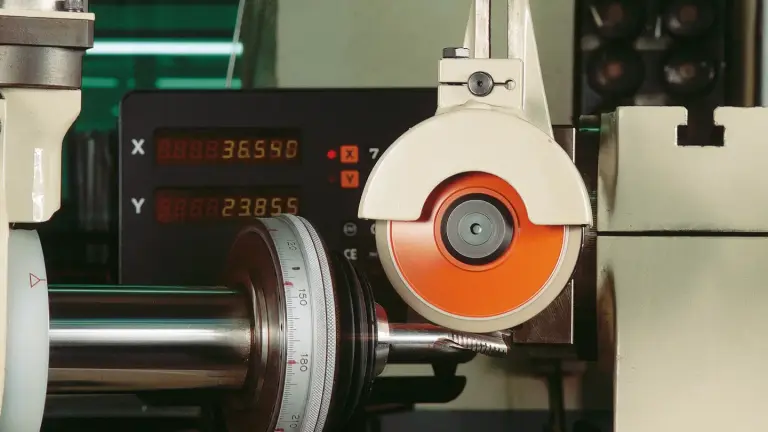
Cooling
- Wet grinding: With wet grinding, a coolant such as emulsion or oil is used to effectively dissipate the heat produced. This protects the workpiece and tool against thermal damage and prolongs the life of the grinding tool.
- Dry grinding: Dry grinding is performed without any coolant and is specifically designed for applications where fluids cannot or do not need to be used.
Process temperature
- Wet grinding: Much lower temperatures during the grinding process due to the active cooling.
- Dry grinding: Higher process temperatures that need to be managed using modified tool bonds in order to prevent material damage.
What are the advantages of wet grinding?
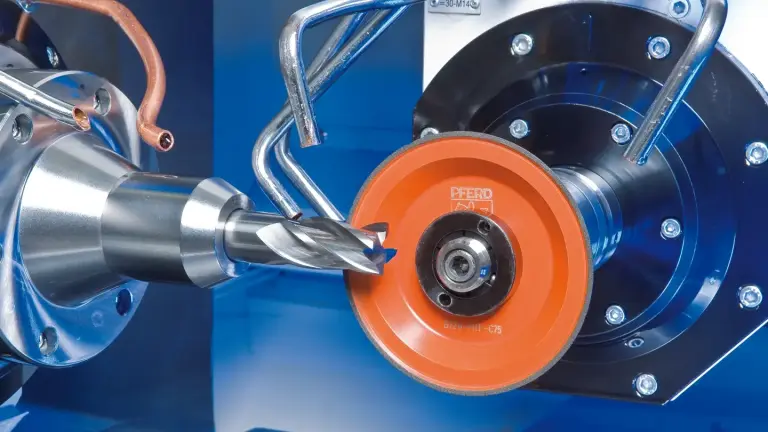
With wet grinding, a coolant (such as emulsion or oil) is used to help effectively dissipate the heat produced during the grinding process. This method is predominantly used in applications that require a minimal thermal load.
- Optimized process reliability: The cooling reduces thermal loads, which minimizes the risk of workpiece deformation, cracks, and surface damage.
- Longer tool life: Less wear thanks to the reduced friction and lower temperatures.
- Outstanding surface quality: The grinding pattern is more even and free of thermal effects such as burn marks.
What are the advantages of dry grinding?
Dry grinding is performed without coolant. The heat is dissipated via the workpiece and the abrasive bond. This method is particularly suitable for applications where it is not feasible to use coolant.
Example: Resinoid-bonded diamond and CBN grinding tools are used dry on tool grinding machines as the machines are not enclosed or the user constantly needs to visually monitor the grinding process.
The ideal method for you
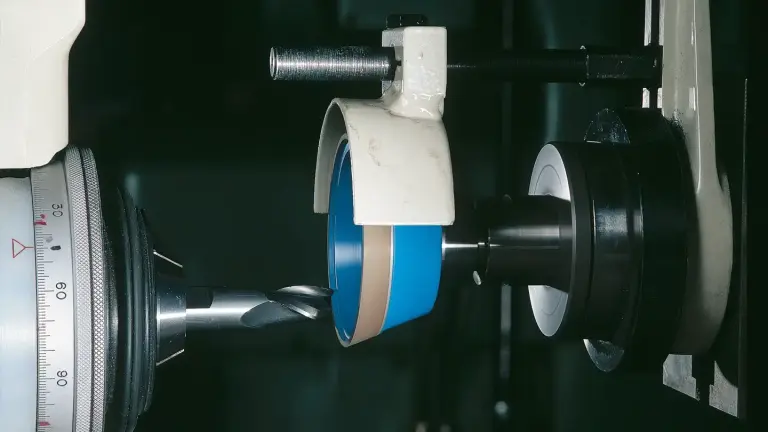
PFERD TOOLS offers a comprehensive range of diamond and CBN tools for wet and dry grinding. Our technical advisers stand ready to assist you in finding the perfect solution for your grinding work.
Get in touch with us today – for maximum efficiency and quality in your machining workflows.
Get in touch