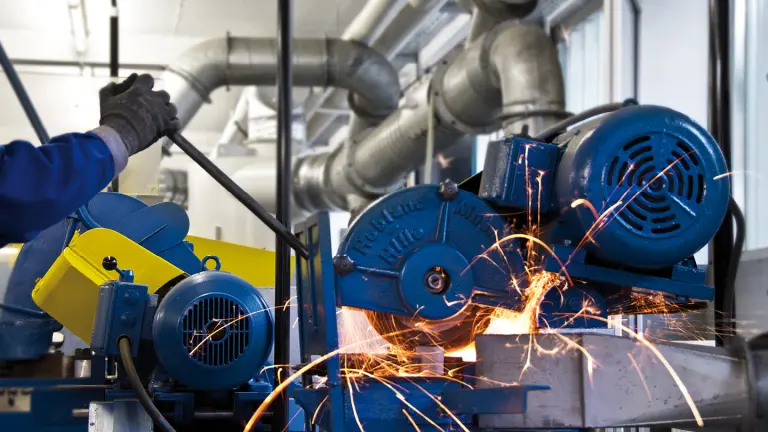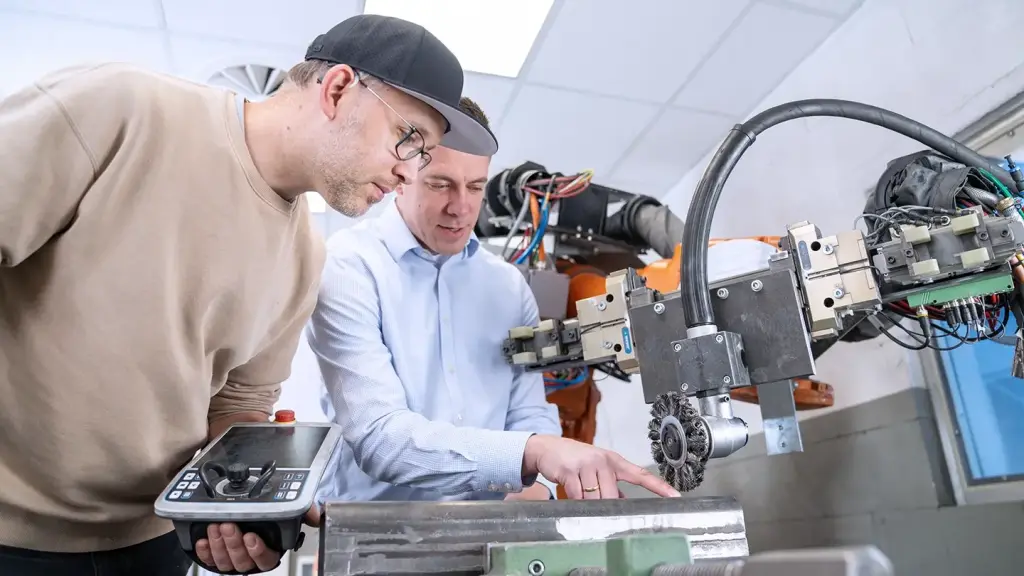
Which methods exist and which one is right for your application?
The cutting of materials is a crucial process in industrial manufacturing environments.
Whether it’s metal, concrete or composites, choosing the right cutting method for stationary applications not only affects the quality of the cut, but also the efficiency of the production process.
But which cutting methods exist, and when should they be used?
What do we mean by cold cutting-off and when is it the best choice?
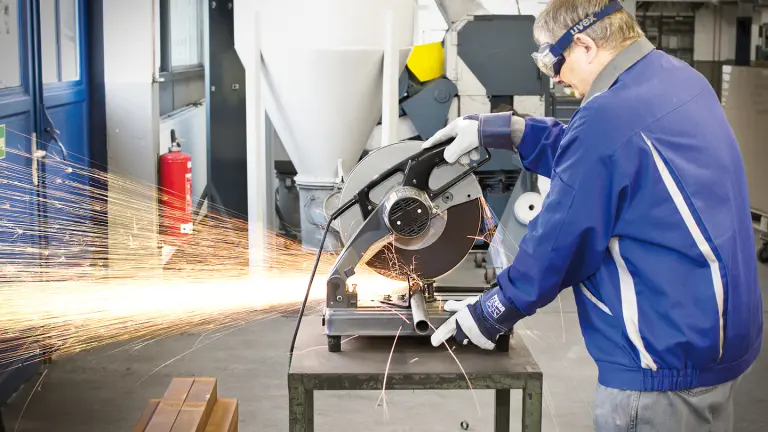
Cold cutting-off (up to 100°C) denotes a method where there must be no or only minimal heat build-up on the workpiece. This is particularly important in situations where thermal changes to the material, such as annealing or distortion, must be avoided.
Cold cutting-off is typically used with circular saws with tungsten carbide or HSS saw blades, band saws and stationary cut-off wheels with or without (dry cutting) cooling. These methods are predominantly used in the metalworking industry, such as when cutting precision components, or in aerospace engineering where the material properties must be retained exactly.
What are the advantages of cold cutting-off?
A major advantage of cold cutting-off (<100°C) is that it does not cause any changes to the microstructure or heat discolouration and offers high cutting quality without needing to spend time reworking the workpiece. The cuts are precise and virtually burr-free.
However, this method is not always the ideal choice. If you are working on very hard or thick-walled materials, cold cutting-off can be inefficient as the cutting speed is lower and there is more tool wear.
What happens with warm cutting-off and when is it used?
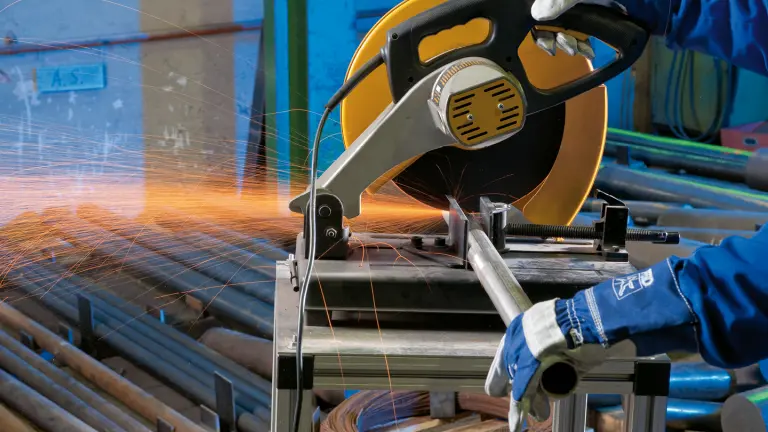
Warm cutting-off lies between cold and hot cutting-off (100-600°C). It produces a certain amount of heat, but not enough to significantly change the microstructure of the material. Typical examples include cut-off grinding with resinoid-bonded discs, laser cutting with moderate power and water jet cutting with abrasive additives.
These methods are often used in the steel and aluminium processing industries when a high cutting speed is required but changes to the material need to be limited.
What are the advantages of warm cutting-off?
One advantage of warm cutting-off is that it enables much faster cuts than cold cutting-off and requires less reworking than hot cutting-off. It is also suitable for materials of medium to large thickness.
However, depending on the specific method used, heat zones can occur that affect the material. In many cases cooling or reworking is required to achieve optimum results.
Why is hot cutting-off so powerful and what aspects should you pay attention to?
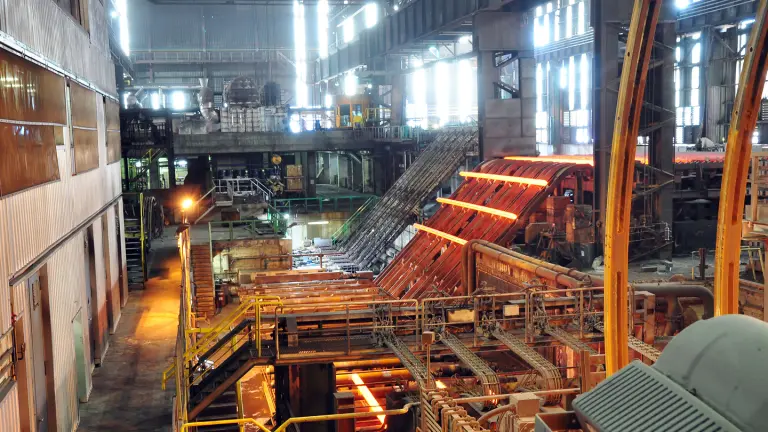
Hot cutting-off (600 to over 1,000°C) generates very high temperatures that can change the microstructure of the material. These methods are particularly powerful and are the preferred choice when working on thick materials or materials that are difficult to cut.
The most common examples include oxy-fuel cutting with an oxyacetylene flame, plasma cutting with ionized gas and laser cutting with high power. These methods are indispensable in mechanical engineering, heavy industry and steel construction when thick sheets or complex contours need to be cut quickly.
What characterises hot cutting-off?
The major advantage of hot cutting-off is its extremely high cutting speed which enables solid workpieces to be processed efficiently. It is also ideal for thick and high-strength materials and is simple to automate in series production.
However, there are also disadvantages: the pronounced heat-affected zone can change the microstructure of the material, potentially altering its hardness and structure at the cut edges. Reworking such as grinding or deburring is often required, and these methods use much more energy than cold or warm cutting-off.
Which cutting method is right for you?
Which cutting method is best depends on several factors: the material, cutting quality required, production speed, and reworking.
- If you need precise, burr-free cuts without changing the microstructure, cold cutting-off is best.
- If you’re looking for a good balance between speed and quality, warm cutting-off is recommended.
- For maximum power when working on thick materials, hot cutting-off is the most efficient solution.
Each method has its strengths – choosing the right one will ensure efficiency and high product quality. If you’re looking to use the optimum cutting method for your Production department, simply get in touch with us.
Our experienced technical advisers would be pleased to assist you.
Get in contact now